Dollar Tree's shopper traffic jumps 3.8% as it spends tariff refund money and lifts its EPS outlook
Q3 comparable sales rose 4.6% on traffic. Tariff refund spending cost 42 cents a share; without the tariff item the full-year guide is about $7.50, by our math.
5 min read
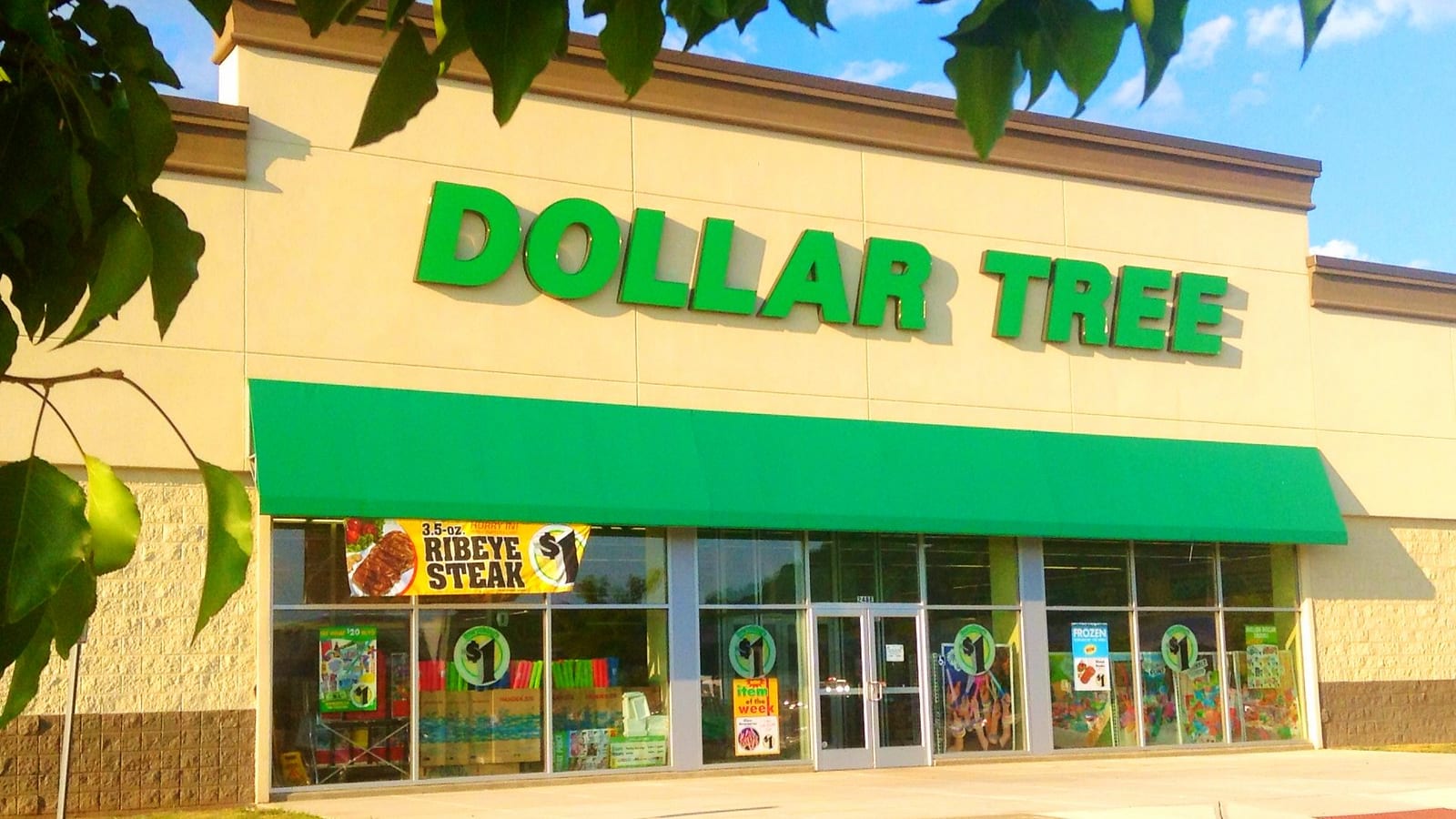
Dollar Tree (NASDAQ: DLTR), the US and Canadian discount chain, reported third-quarter results on November 24 that show more customers coming through its doors while profit was held back by a deliberate decision to give away part of a tariff windfall. The company now runs only the Dollar Tree and Dollar Tree Canada banners, after selling Family Dollar in July 2025, so all figures here are for continuing operations.[1]
Comparable store net sales rose 4.6%, on top of 4.2% a year earlier, and this quarter's growth came mainly from traffic, which rose 3.8%. Over the first 39 weeks as a whole the split was the other way round: average ticket up 2.9% and traffic up 1.1%. Because those nine-month figures include the third quarter, the earlier months must have leaned even more heavily on ticket, so the latest quarter marks a clear shift towards more visits.[1]
“Comp traffic accelerated to 3.8% and drove comparable sales above the high end of our outlook.”
The quarter in numbers
| Measure | Q3 2026 | Q3 2025 | Change |
|---|---|---|---|
| Net sales | 5,073.7 | 4,746.3 | +6.9% |
| Comparable store net sales | +4.6% | +4.2% | n/a |
| Gross margin | 35.7% | 35.8% | -0.1 pts |
| SG&A, % of total revenue | 29.9% | 29.2% | +0.7 pts |
| Operating income | 309 | about 344 | -10.1% |
| Diluted EPS (GAAP) | $1.24 | $1.20 | +3.3% |
| Adjusted diluted EPS | $1.16 | $1.21 | -4.1% |
| Free cash flow | 121.6 | (57.1) | n/a |
Prior-year operating income and adjusted EPS are derived from the reported changes and the reconciliation table; prior-year gross and SG&A ratios are derived from the stated basis-point changes. Adjusted EPS and free cash flow are company-defined non-GAAP measures. Source: Dollar Tree third-quarter release, November 24, 2026.
What the tariff reinvestment cost
Dollar Tree has been booking refunds of IEEPA tariffs, the import duties imposed under emergency-powers legislation, and has chosen to put part of that money back into the business. In the third quarter it spent $103 million on reinvestment, $27 million in cost of sales and $76 million in selling, general and administrative costs, while refunds recognised in the quarter came to only $4 million. The net cost of about $99 million equals the 195 basis points of operating margin the company attributes to the programme.[1]
Of the SG&A spending, $40 million was a charitable donation. The release does not say what the rest of the reinvestment bought. Excluding the whole tariff item, adjusted EPS would have been roughly $1.58, by our calculation, against $1.21 a year earlier. That comparison flatters the quarter somewhat, because lower tariff costs on goods also helped the gross margin, and the release does not quantify that effect separately.[1]
GAAP EPS of $1.24 was above the adjusted figure because it included a $0.10 non-operating insurance gain, which the company removes from its adjusted measure. The release records an $18.3 million gain in the quarter from insurance proceeds for its distribution centre in Marietta, Oklahoma, which a tornado destroyed in 2024.[1]
The raised outlook, with and without tariffs
| Measure | Company outlook | Tariff item included | Excluding tariff item (our calculation) |
|---|---|---|---|
| Full-year adjusted EPS | $8.05 - $8.25 | about +$0.65 | about $7.40 - $7.60 |
| Fourth-quarter adjusted EPS | $2.46 - $2.66 | about -$0.25 | about $2.71 - $2.91 |
| Full-year net sales | $20.6bn - $20.7bn | n/a | n/a |
| Fourth-quarter net sales | $5.7bn - $5.8bn | n/a | n/a |
| Fourth-quarter comparable sales | +3% to +4% | n/a | n/a |
The release says the full-year outlook was increased but does not give the previous range. Source: Dollar Tree third-quarter release, November 24, 2026.
The figures hang together. The full-year EPS range minus the fourth-quarter range leaves about $5.59 for the first nine months, and the company reports a $0.90 net tariff benefit to date. A $0.90 benefit over nine months followed by a $0.25 cost in the fourth quarter gives the roughly $0.65 included in the full-year guide. In other words, about 8% of the guided full-year EPS at the midpoint comes from the tariff refunds, by our calculation.[1]
The fourth-quarter comparable-sales outlook of 3% to 4% is below the 4.6% just reported. The release does not explain why management expects slower growth, so it may reflect caution or a tougher comparison; we cannot tell from the release.[1]
Stores, buybacks and cash
Dollar Tree opened 84 stores in the quarter and ended it with 9,511. It converted or added about 800 stores to its multi-price format, taking the total to about 7,400, so roughly three-quarters of the chain now sells items above the old single price point. It expects about 400 openings and 75 closures for the year.[1]
The company bought back 1.8 million shares for $205 million in the quarter, about $114 a share by our calculation, and 12.9 million shares for $1.4 billion so far this year. It had $966 million of cash, nothing drawn on its revolving credit facility and $2.3 billion left under its buyback authorisation at October 31. Free cash flow was $122 million in the quarter, against negative $57 million a year earlier, after operating cash flow of $375 million and capital spending of $254 million. Over 39 weeks it reached about $1.19 billion, by our calculation.[1]
What to watch
- Whether traffic keeps driving comparable sales in the fourth quarter, the holiday period, against a 3% to 4% outlook.
- The size and timing of any further tariff refunds and how much of them Dollar Tree spends rather than keeps.
- The pace of buybacks against $966 million of cash and quarterly free cash flow.
Questions readers ask
- Why did Dollar Tree's adjusted profit fall when sales rose 6.9%?
- Mainly because it spent a net $99 million of tariff refund money in the quarter, including a $40 million donation. The company puts the cost at $0.42 a share; adjusted EPS fell 4.1% to $1.16.[1]
- How much of the raised outlook comes from tariff refunds?
- The company says about $0.65 of its $8.05 to $8.25 adjusted EPS range comes from the net effect of tariff refunds and reinvestments. Without it the range would be about $7.40 to $7.60, by our calculation.[1]
Sources
- Dollar Tree, Inc. Reports Third Quarter Results. Dollar Tree, Inc. (investor relations), Highlights and footnote 1; third-quarter and year-to-date results; fiscal 2026 and fourth-quarter outlook; reconciliation of adjusted diluted EPS; free cash flow reconciliation. Accessed .