FCC clears SpaceX for up to 1 million data-center satellites, with the first not due until 2033
The Starmind licence is a ceiling with deadlines, not a build plan. It waives bond rules and defers the disposal plan for satellites above 600 km.
3 min read
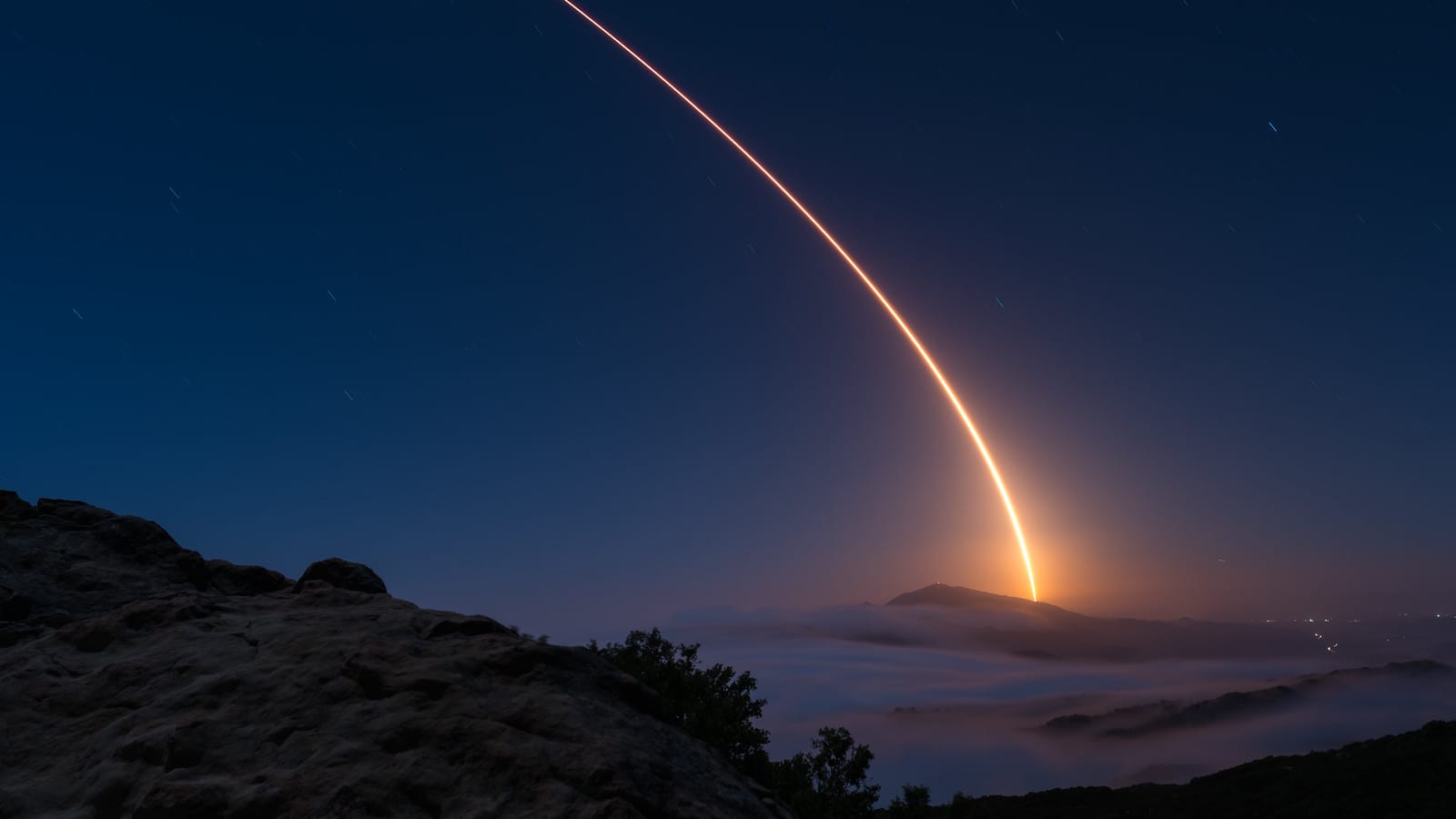
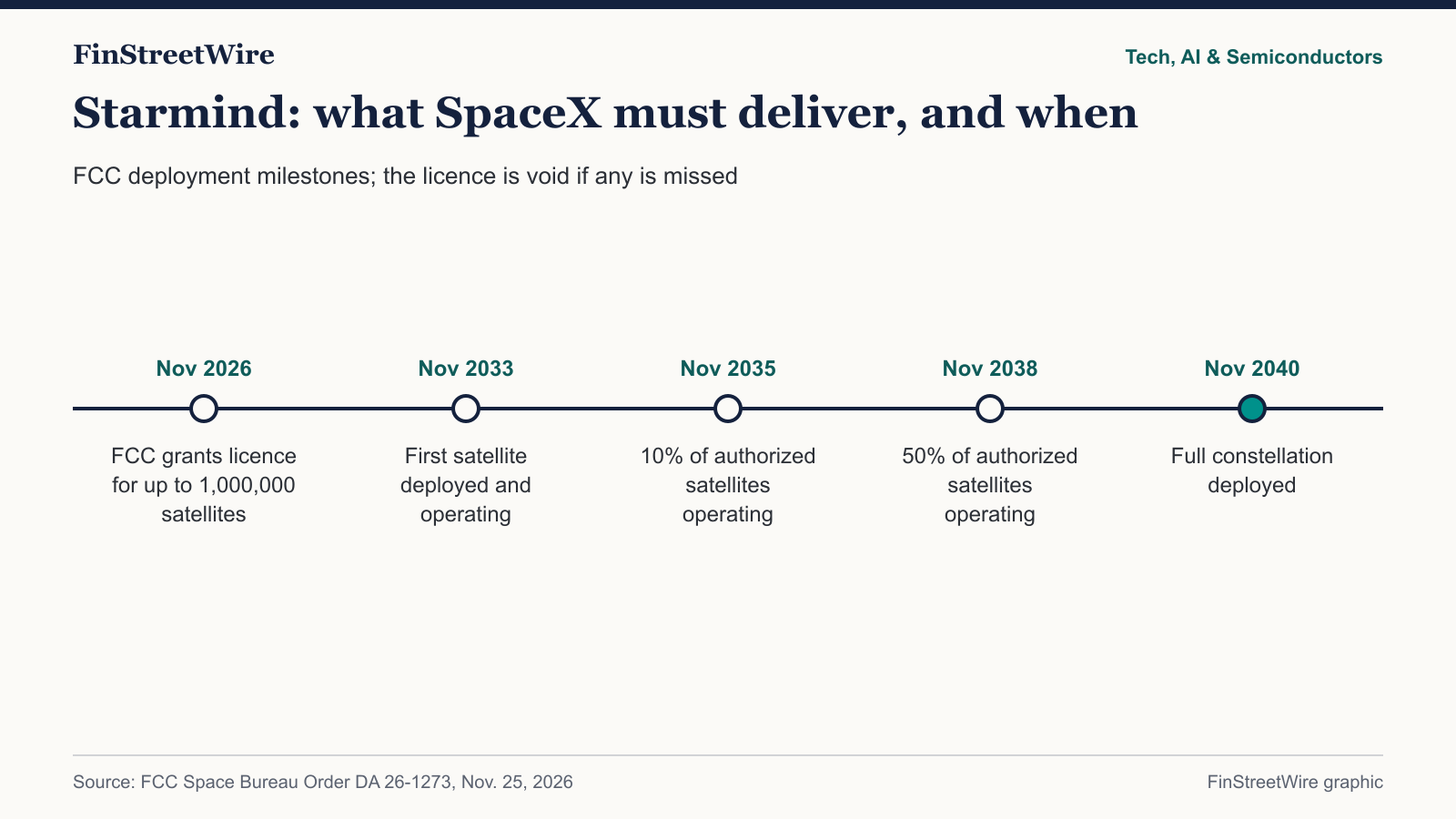
The Federal Communications Commission has given SpaceX permission to put up to 1 million satellites into orbit as data centers, a constellation the company calls Starmind. The order, issued on Nov. 25 by the agency's Space Bureau under delegated authority, is the first US authorization for a constellation of data centers in space, the FCC said.[1][2]
The number is a regulatory ceiling. Nothing in the order requires SpaceX to launch a million satellites, or shows that orbital computing can be built or sold at a profit. The order itself notes that some commenters doubted the technology was feasible and says such questions fall outside the agency's radio-focused review.[1]
What the licence actually covers
The FCC licenses radio spectrum, and Starmind barely uses it. SpaceX told the agency the satellites will communicate through optical inter-satellite links with its Starlink network. The grant authorizes Ka-band frequencies, 18.8-19.3 GHz down and 28.6-29.1 GHz up, only as an unprotected backup for telemetry, tracking and command if those optical links fail, and SpaceX may not cause interference to other users.[1][2]
The satellites would fly in shells between 500 km and about 1,000 km, at 30-degree and sun-synchronous inclinations. The order sets the licence term at 15 years from the date SpaceX certifies that the first satellite is in orbit and working, and gives SpaceX 30 days from Nov. 25 to decline the grant as conditioned.[1]
Deadlines and what was left open
The milestones are long. SpaceX asked to be held to the new deployment schedule the Commission adopted in its space modernization rulemaking, and the Bureau agreed, waiving the older milestone and surety bond rules. That gives SpaceX seven years to launch and operate a single Starmind satellite, nine years to reach 10% of the authorized number, twelve to reach half and fourteen to finish.[1]
Orbital debris was the most contested issue. The Bureau found SpaceX's plan complies with its rules for satellites below 600 km, where atmospheric drag brings dead satellites down. For anything higher, SpaceX must file a modification with a final debris plan before deploying, and its request to waive the rule requiring satellites below 2,000 km to be disposed of by re-entry was deferred for lack of information.[1]
Amazon's Kuiper Systems, Viasat and the American Astronomical Society had petitioned the FCC to deny the application. Viasat and others raised interference and collision risk; the astronomers argued that waste heat from so many orbiting computers could raise the infrared background of the sky. The Bureau denied all three petitions, finding SpaceX's commitments, including coordination with the National Science Foundation, sufficient, and declined to rule on impacts it said do not arise from radio operations.[1]
“The FCC supercharges that effort today by granting, for the first time ever, authorization to deploy 1 million orbital compute modules for data centers in space.”
Why it matters for AI infrastructure investors
The FCC frames the project around energy, describing it as a step toward harnessing the full power of the sun for computing. The order settles none of the economics. Those depend on things the licence does not address, such as launch costs, the mass and working life of each module, and how results computed in orbit are delivered to customers on the ground.[1][2]
What it does settle is regulatory priority. SpaceX now holds a US licence for the concept years before any competitor, and the FCC said it is reviewing other orbital data center proposals. For suppliers of AI chips, servers and the fiber that links ground data centers, the near-term demand story is still on the ground: no Starmind satellite has to fly before late 2033.[1][2]
Sources
- Space Exploration Holdings LLC, Application for Launch and Operating Authority for the SpaceX Orbital Data Center System: Memorandum Opinion and Order and Authorization (DA 26-1273). Federal Communications Commission, Space Bureau, Grant conditions 1-11; Order paras. 3-20 (ICFS File No. SAT-LOA-20260108-00016). Accessed .
- FCC Authorizes 1 Million Satellites for Data Centers in Space. Federal Communications Commission, News release and Chairman Carr statement. Accessed .