Fed minutes: eight of 12 regional banks asked for a higher discount rate before the October hold
Richmond, Kansas City and Dallas switched to seeking a quarter-point increase days before the October 28 meeting. The Board kept 4% both times.
4 min read
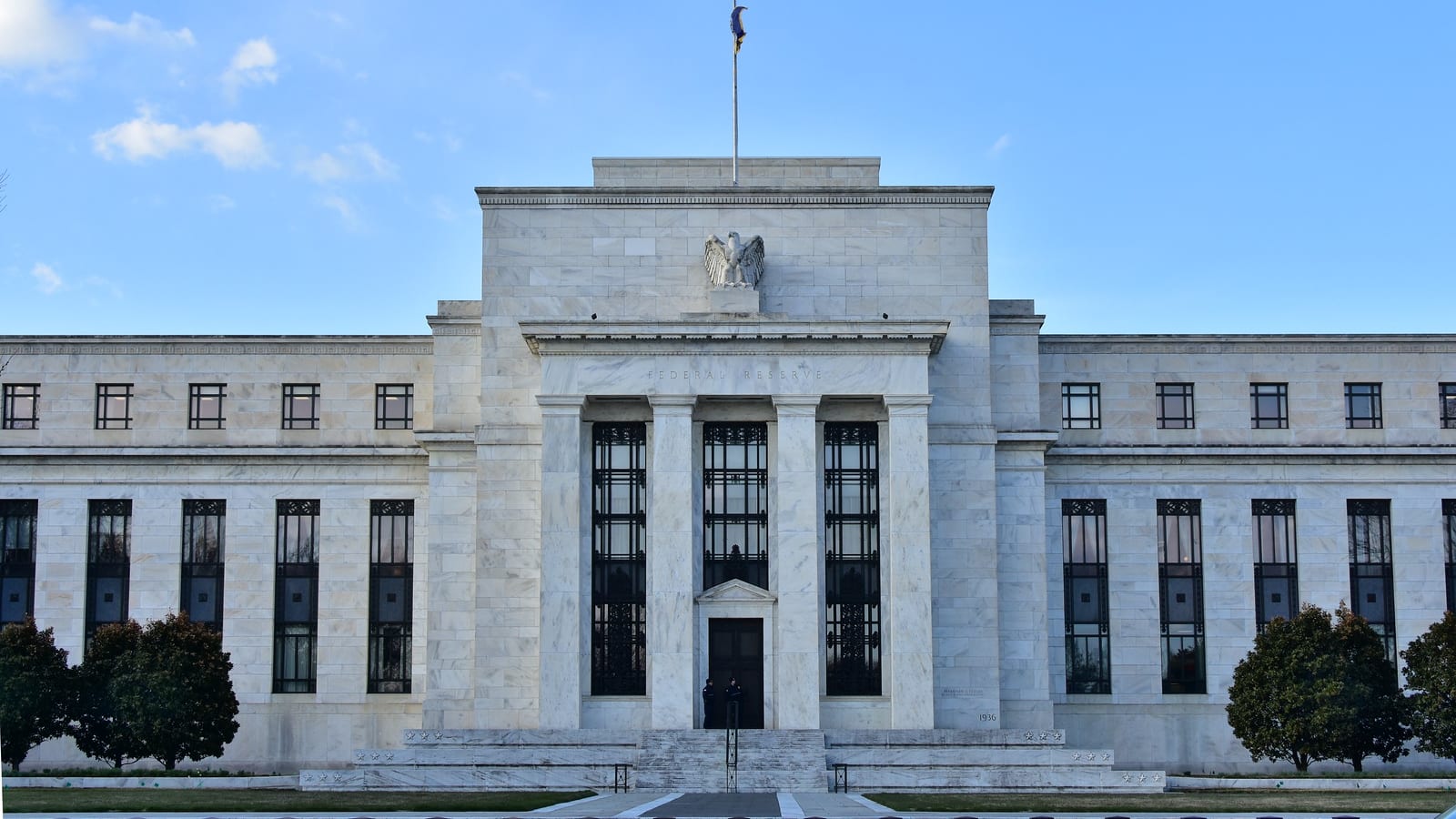
Most of the Federal Reserve's regional banks wanted higher interest rates going into the October policy meeting, minutes published by the Fed Board on Tuesday show. By October 28, when the Federal Open Market Committee (FOMC) left its target range at 3.75% to 4%, directors at eight of the 12 Reserve Banks had voted to raise the discount rate by a quarter point.[1][2]
The discount rate, formally the primary credit rate, is what the Fed charges banks for short-term loans at the discount window. It is normally set at the top of the federal funds target range, so a request to raise it from 4% to 4.25% amounts to a regional bank's view that the target range itself should go up by 0.25 point. That interpretation is ours; the minutes record the votes, not the reasons for each.[1]
How the votes shifted
| Reserve Bank | As of October 19 meeting | As of October 28 meeting |
|---|---|---|
| Boston | 4.25% (voted Oct 15) | 4.25% (Oct 15) |
| Cleveland | 4.25% (Oct 15) | 4.25% (Oct 15) |
| Chicago | 4.25% (Oct 15) | 4.25% (Oct 15) |
| St. Louis | 4.25% (Oct 15) | 4.25% (Oct 15) |
| Minneapolis | 4.25% (Oct 15) | 4.25% (Oct 15) |
| Richmond | 4% (Oct 8) | 4.25% (Oct 22) |
| Kansas City | 4% (Oct 8) | 4.25% (Oct 22) |
| Dallas | 4% (Oct 8) | 4.25% (Oct 22) |
| Atlanta | 4% (Oct 8) | 4% (Oct 22) |
| New York | 4% (Oct 15) | no new vote recorded |
| Philadelphia | 4% (Oct 15) | no new vote recorded |
| San Francisco | 4% (Oct 15) | no new vote recorded |
Votes are subject to review and determination by the Board of Governors. The Board approved the existing 4% rate at both meetings. Source: Federal Reserve Board, minutes of discount rate meetings on October 19 and October 28, 2026.
The five banks that asked for an increase on October 15, Boston, Cleveland, Chicago, St. Louis and Minneapolis, held that position. The change came from three banks that had voted on October 8 to keep the rate unchanged. Their directors voted again on October 22, six days before the FOMC decision, and this time asked for 4.25%. Atlanta's directors voted the same day to stay at 4%.[1]
What regional directors were reporting
The October 19 minutes summarise what Reserve Bank directors told the Board. They described economic activity and labour markets as stable, with some specialised jobs still hard to fill. Costs for construction, energy, transportation and technology were putting pressure on some sectors. Most directors said higher interest rates had dampened loan demand, and several said inflation remained elevated, with some pointing to price-sensitive consumer behaviour.[1]
At the Board level the minutes record no appetite for a change. At both meetings, no sentiment was expressed for changing the primary credit rate. The October 28 action, which also kept interest on reserve balances at 3.90%, was approved by Chairman Warsh and all six other governors.[1]
Why it matters now
The minutes describe October, but they land in a week when new data show inflation moving the wrong way. The Bureau of Economic Analysis reported on November 25 that core PCE inflation, the Fed's preferred underlying measure, rose to 3.3% in the year to October from 3.1% in September. A majority of regional bank boards favouring a higher rate, combined with firmer inflation, suggests the case for tightening has support inside the Fed System, even if the Board itself showed none in October. That is our assessment.[1][3]
Readers should keep the limits in view. Discount rate votes are made by the regional banks' boards of directors, and only the Board of Governors decides. The FOMC, which sets the federal funds rate, includes the governors and a rotating subset of Reserve Bank presidents; the directors' votes are not FOMC votes.[1]
Questions readers ask
- What is the Fed's discount rate?
- It is the rate on primary credit, the Fed's short-term loans to banks through the discount window. It was 4% after the October 2026 meetings, the top of the 3.75% to 4% federal funds target range.[1]
- Did the Fed raise rates in October 2026?
- No. The FOMC kept the federal funds target at 3.75% to 4% on October 28, and the Board kept the discount rate at 4%.[1]
Sources
- Minutes of the Board's discount rate meetings on October 19 and October 28, 2026. Board of Governors of the Federal Reserve System, October 19, 2026 entry p. 1; October 28, 2026 entry p. 2. Accessed .
- Minutes of the Board's discount rate meetings on October 19 and October 28, 2026 (press release). Board of Governors of the Federal Reserve System, Press release, November 24, 2026. Accessed .
- Personal Income and Outlays, October 2026. U.S. Bureau of Economic Analysis, News release BEA 26-51, PCE price paragraph. Accessed .