Fed Beige Book: growth narrows to eight Districts as firms absorb costs they cannot pass on
The Fed's last regional survey before its Dec. 8-9 meeting shows wages picking up, prices still rising moderately and consumer spending flat.
3 min read
The US economy is still growing in most of the country, but in fewer places than six weeks ago, according to the Federal Reserve's latest Beige Book, published on Wednesday. Eight of the 12 regional Reserve Banks described growth between slight and moderate; Boston, Chicago, Kansas City and San Francisco reported activity that was flat or little changed.[1]
The Beige Book is a summary of what businesses, bankers and community groups tell the regional Fed banks, not a statistical release and not a statement of policymakers' views. Its value is direction and texture. This edition, prepared at the Federal Reserve Bank of Atlanta from information gathered up to Nov. 16, is the last one before the Federal Open Market Committee meets on Dec. 8-9.[1][3]
Fewer Districts growing
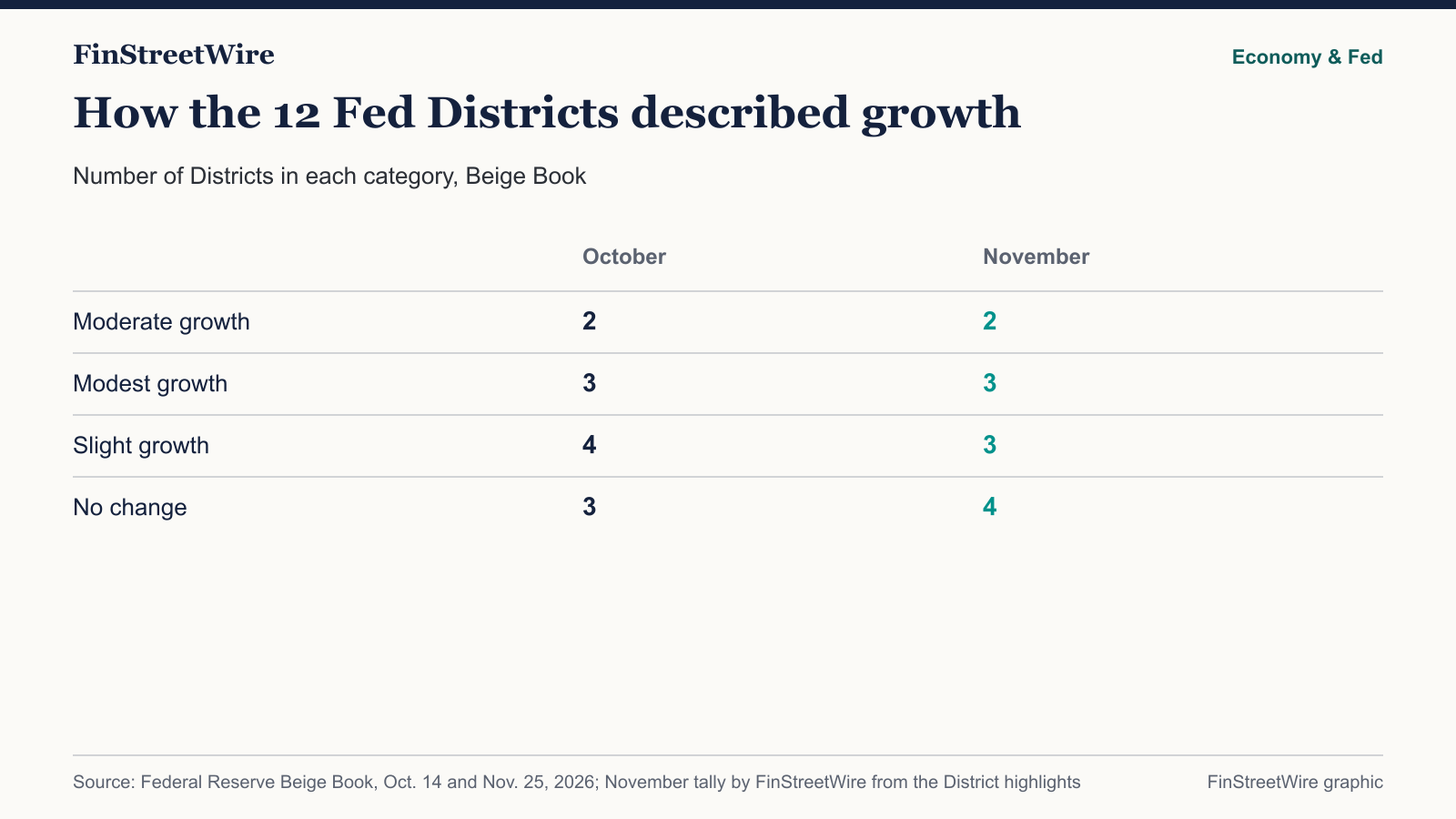
Counting the District summaries, the spread has shifted slightly toward stagnation. Cleveland and Richmond reported moderate growth; Atlanta, St. Louis and Dallas modest growth; New York, Philadelphia and Minneapolis slight growth. In the October report, published Oct. 14, two Districts grew moderately, three modestly, four slightly and three were flat. Dallas, which led in October on the back of manufacturing, said its expansion slowed to a modest pace.[1][2]
Households are the weak spot. Consumer spending was little changed, with shoppers described as price sensitive and choosier about discretionary purchases. Auto sales softened, which contacts put down to high fuel prices and higher interest rates. Home sales and construction weakened as affordability and borrowing costs bit, a pattern that matches the noisy picture in the Census Bureau's latest new home sales data.[1]
Industry is holding up better. Manufacturing grew modestly overall, with strong demand in several industrial segments offsetting weaker consumer and housing-related goods. Port volumes dipped because of the weather, but the report notes that imports related to data centers increased.[1]
Wages up, margins squeezed
Employment rose slightly on balance. Most firms kept head counts steady and hired mainly to replace leavers, and many were reluctant to add staff given uncertainty and softer consumer demand. Pay is the change worth watching: wages and benefits rose moderately, faster than the modest gains in the October report, with pressure concentrated in hard-to-fill jobs and driven partly by cost-of-living adjustments and benefit costs.[1][2]
On prices, the summary says increases were moderate, the same description as in October. Contacts cited energy, transportation, healthcare, insurance and tariffs as sources of cost pressure. The more telling line is about margins: firms said their input costs were rising faster than their selling prices because customers were resisting increases. They expect both costs and prices to keep rising.[1]
“Input cost growth generally outpaced increases in selling prices”
That combination cuts two ways for the Fed. Moderate price growth and faster wage gains point to inflation that is not yet cooling; the Bureau of Economic Analysis reported on Wednesday that the PCE price index rose 3.8% in the year to October. But flat consumer spending and firms swallowing costs suggest demand is too weak for businesses to push prices much further.[1][4]
What it means for investors
For listed companies the report reads as a margin warning more than a demand collapse. Consumer-facing businesses in Kansas City reported lower revenue as price increases strained affordability, and Cleveland said nonlabor cost pressures had been robust for twelve reports in a row. Manufacturers and professional services firms, by contrast, reported pockets of strength.[1]
The Beige Book carries no rate recommendation, and officials weigh it alongside hard data on jobs and prices. Before the December meeting, investors also have the minutes of the October 27-28 meeting, released Nov. 18, and the separate minutes of the regional banks' discount rate meetings.[3]
Sources
- Beige Book, November 2026: National Summary and District highlights. Board of Governors of the Federal Reserve System, Overall Economic Activity; Labor Markets; Prices; Highlights by Federal Reserve District. Accessed .
- Beige Book, October 2026: National Summary. Board of Governors of the Federal Reserve System, Overall Economic Activity; Labor Markets; Prices. Accessed .
- Meeting calendars, statements, and minutes (2021-2027). Board of Governors of the Federal Reserve System, 2026 FOMC Meetings: October 27-28 (minutes released November 18, 2026); December 8-9. Accessed .
- Personal Income and Outlays, October 2026. Bureau of Economic Analysis, PCE price index, percent change from one year ago. Accessed .