Michael Burry sells his last Nasdaq 100 puts because protection got expensive, not on a bullish tech call
The investor says he is now almost entirely long undervalued stocks with about 25% in cash, keeps Nvidia calls and plans to short Nvidia again nearer $200.
3 min read
Michael Burry, the investor known for betting against US housing before 2008, has closed the rest of his bet against the Nasdaq 100.[1][2]
In a Substack post on Wednesday he said that, as technology shares weakened, he sold the final half of his put options on the index, contracts that gain value when it falls.[1][2]
The move drew attention because it came during a sharp sell-off in AI-linked stocks. Read closely, his explanation is about the price of insurance rather than a call that the market has bottomed.[1][2]
Why sell protection in a falling market
Put options become more expensive when markets are volatile, because the chance of a large move rises. Burry has argued that higher volatility has made puts expensive even on companies with little connection to the AI build-out, which leaves outright short selling as the main way to bet against a stock. Selling puts that have gained in value during a sell-off also locks in a profit that could disappear if the market rebounds.[2]
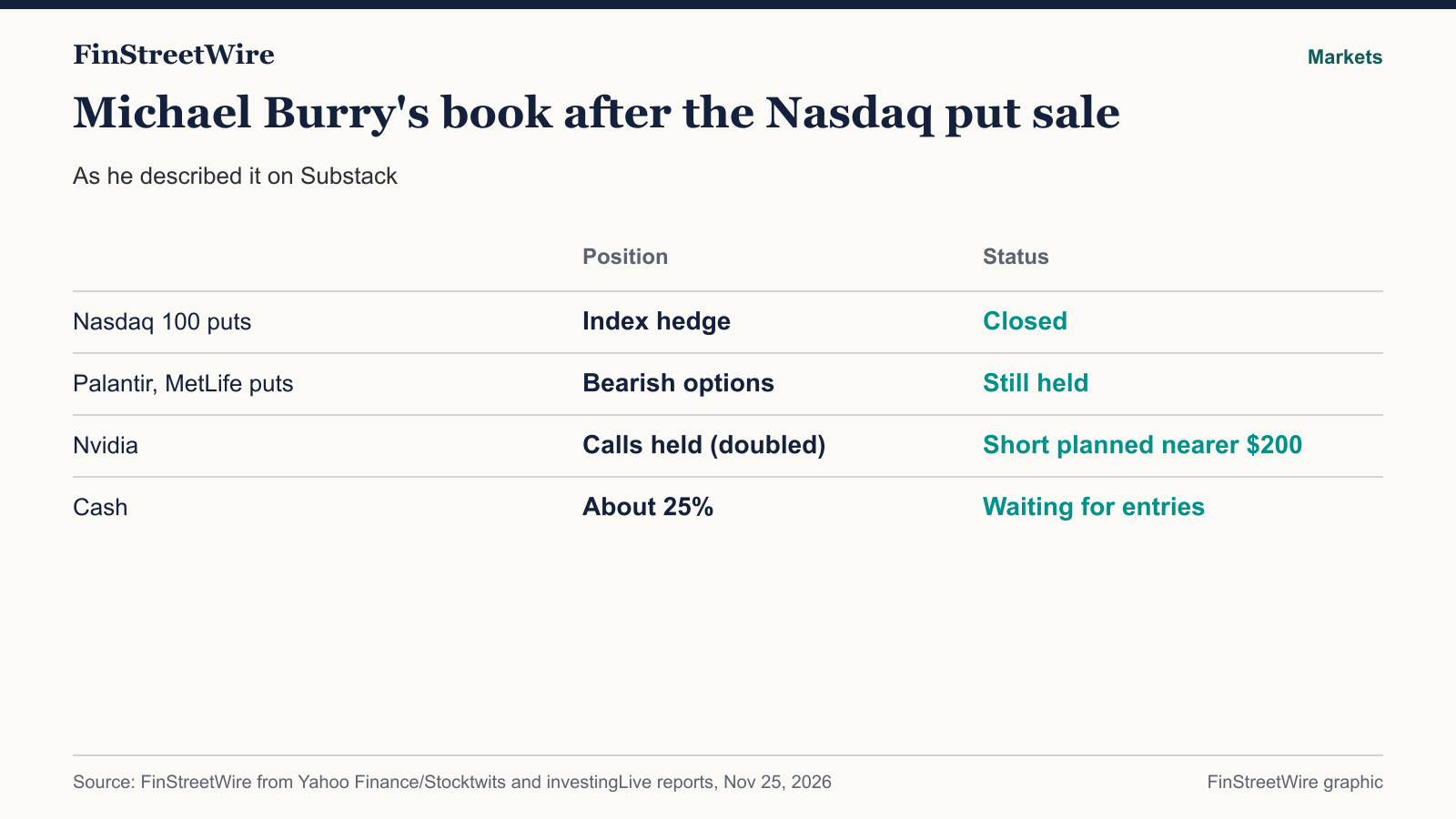
He did not frame the sale as a forecast. He said he is still evaluating potential short positions but currently prefers owning shares, and the only bearish option positions left in his portfolio are on Palantir and MetLife.[1]
What he holds now
Burry described the portfolio as long undervalued common stocks, longer-dated LEAP call options and preferred stock, with what he called a modest cash pile of about 25%. MercadoLibre, Australian online retailer Temple & Webster and JD.com rank among his largest holdings, and he said that the international tilt reflects continued high valuations in the United States. Smaller positions include Adobe, Birkenstock, Deckers, Lululemon and PayPal, plus Hong Kong-listed BYD, Tencent and Meituan.[1]
On Nvidia he holds both views at once. He owns call options on the chipmaker that he says have doubled in value, and he said his plan is to short Nvidia again nearer $200 a share during a period of market optimism, adding that the time is not now.[1]
“So for now, I am long undervalued common stocks, LEAP calls and preferred stock, with a modest cash pile.”
How much weight to give it
Two cautions apply. First, since winding down Scion Asset Management last year, Burry reports his trades on Substack instead of in regulatory filings, which means nobody can independently confirm the positions. Second, a single investor's hedging decision says more about the cost of protection than about where the Nasdaq 100 goes next. The sell-off that made his puts profitable is the same one that made fresh protection expensive.[2]
Questions readers ask
Sources
- Michael Burry Sells Remaining Nasdaq-100 Puts, Eyes Fresh Nvidia Short Near $200. Yahoo Finance (Stocktwits), Full report quoting Burry's Substack. Accessed .
- Michael Burry closes his Nasdaq bets and shifts to value, but still plans an Nvidia short. investingLive, Full report. Accessed .