Nasdaq jumps 2.3% as AI stocks lead a post-Thanksgiving rally while yields climb
Technology shares led US stocks higher in a shortened Black Friday session, while Treasury yields rose and the 10-year touched 4.94%.
4 min read
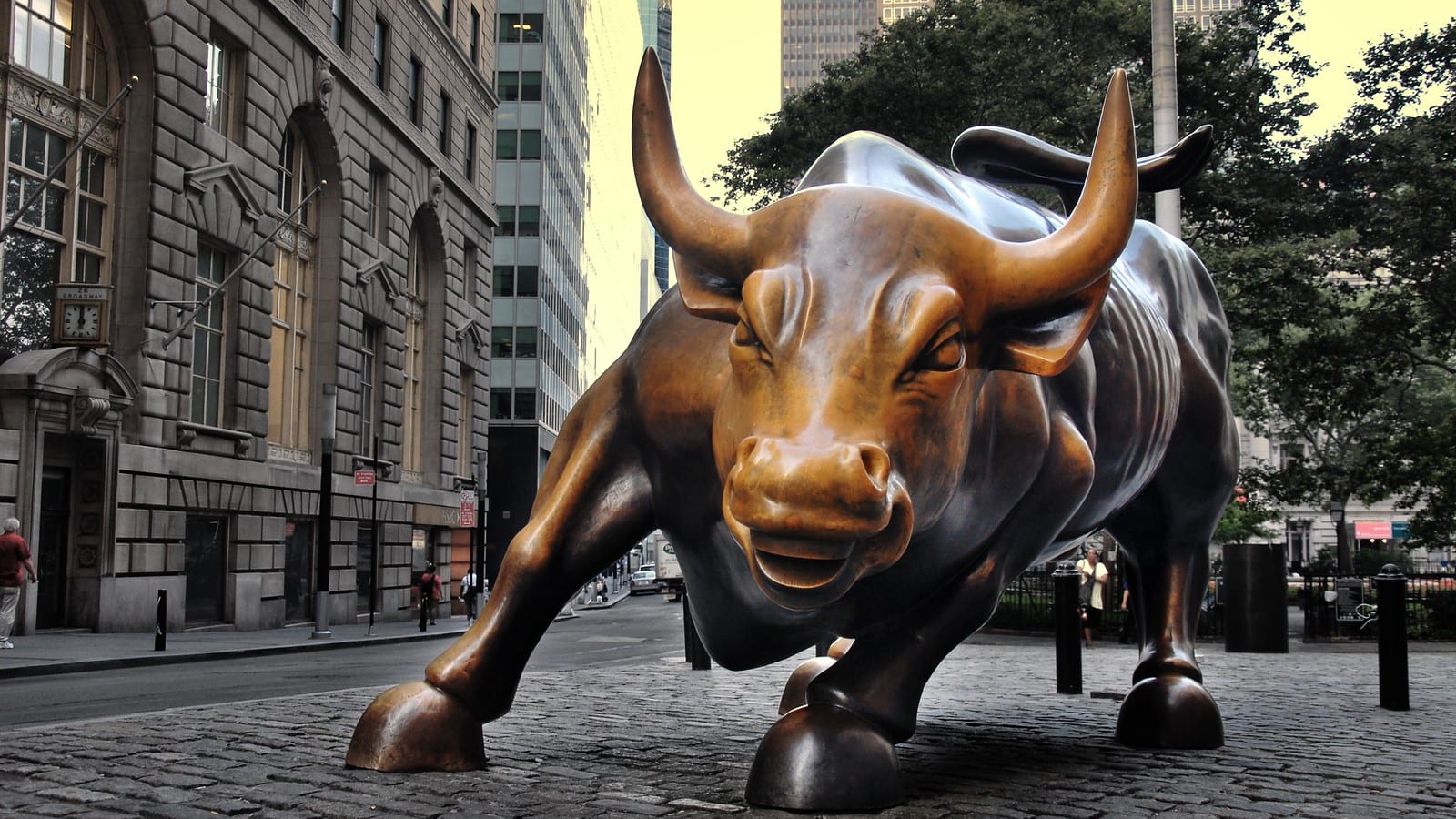
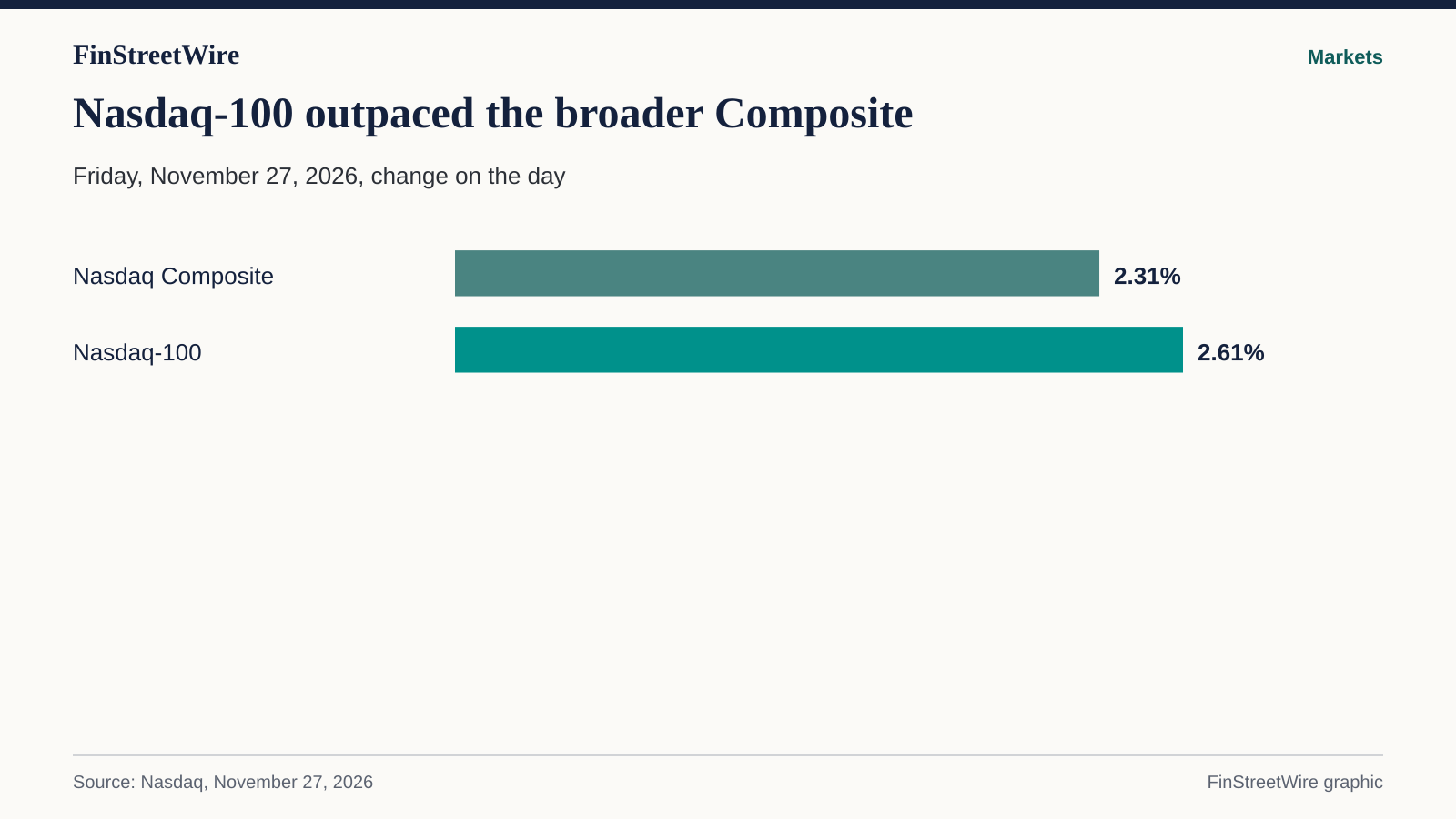
The Nasdaq Composite rose 2.31% to 24,129.50 on Friday, November 27, in a shortened session that ended at 1 p.m. ET, as technology shares led US stocks higher after Thanksgiving.[1]
The Nasdaq-100, the gauge of large technology companies, rose further, up 2.61% to 26,726.39, and both indexes closed near the top of their ranges for the day. The question is whether a one-day, holiday-shortened rally holds once full trading resumes.[1][2]
Our read: the rally was led by large technology shares, not the broad market, since the Nasdaq-100 beat the Composite by 0.30 percentage points. But rising bond yields are the counterweight to watch.[1][2]
Why technology led the rally
The gap between the two indexes is the evidence. The Nasdaq-100 holds the largest non-financial companies listed on Nasdaq, and it rose 0.30 percentage points more than the broader Composite on Friday, by our calculation. Both indexes closed near their highs for the day: the Composite traded between 23,690.60 and 24,149.09, and the Nasdaq-100 between 26,166.87 and 26,757.20.[1][2]
Friday was Black Friday, and Black Friday online sales were the day's other big US consumer story. A strong consumer backdrop gives technology shares room to run, but one shortened session proves little on its own.
| Index | Close | Change (points) | Change | Previous close |
|---|---|---|---|---|
| Nasdaq Composite | 24,129.50 | +543.70 | +2.31% | 23,585.80 |
| Nasdaq-100 | 26,726.39 | +679.49 | +2.61% | 26,046.90 |
Prices as of the November 27, 2026 close; the shortened session ended at 1 p.m. ET. Source: Nasdaq.
Yields rose as bonds sold off
While stocks rose, bonds fell. When bond prices fall, their yields rise, and the yield on the 10-year Treasury note, the benchmark for mortgages and corporate borrowing, climbed 9 basis points to 4.94% on November 27, from 4.85% on November 25. A basis point is one-hundredth of a percentage point.[3]
The move ran across the curve. The 2-year yield rose 8 basis points to 4.69%, and the 30-year yield rose 9 basis points to 5.33%. The gap between the 2-year and 10-year yields, known as the 2s10s spread, widened by 1 basis point to 25 basis points, by our calculation.[3]
| Maturity | Nov 25 | Nov 27 | Change |
|---|---|---|---|
| 2-year | 4.61% | 4.69% | +8 bp |
| 10-year | 4.85% | 4.94% | +9 bp |
| 30-year | 5.24% | 5.33% | +9 bp |
Daily par yields. Changes by our calculation. Source: U.S. Department of the Treasury.
Rising yields matter for stocks because they raise borrowing costs and compete with equities for investors' money. For how the move feeds through to funds that hold bonds, see our explainer on bond ETFs and duration.
Fed officials are now in the blackout period ahead of the Federal Open Market Committee's December 8-9 meeting, so no official will speak publicly about policy before the Fed's December decision.[4]
The bear case and the bull case
The bull case is straightforward. Large technology shares led, both indexes closed near their highs for the day, and the rally came with a strong consumer backdrop on Black Friday.[1][2]
The bear case is the bond market. Yields rose across the curve, the 10-year touched 4.94%, and the rise came days before the November jobs report and the Fed's December meeting, with officials silent in the blackout period.[3][4]
Our read: Friday's rally is real but narrow, technology-led, in a shortened session, against rising yields. It holds if the jobs report and the Fed meeting do not push yields higher still.
What to watch
- The November jobs report, due Friday, December 4, at 8:30 a.m. ET from the Bureau of Labor Statistics.
- The Federal Open Market Committee meeting on December 8-9, with the decision and updated economic projections due December 9.
- The 10-year Treasury yield, and whether it holds above 4.94% or pushes toward 5%.
- Whether technology shares keep leading once full trading resumes on Monday.
Questions readers ask
- How much did the Nasdaq rise on Friday?
- The Nasdaq Composite rose 543.70 points, or 2.31%, to close at 24,129.50 on November 27, while the Nasdaq-100 rose 679.49 points, or 2.61%, to 26,726.39.[1][2]
- What happened to Treasury yields?
- The 10-year yield rose 9 basis points to 4.94% on November 27, from 4.85% on November 25. The 2-year yield rose to 4.69% and the 30-year yield to 5.33%.[3]
- When does the Fed meet next?
- The Federal Open Market Committee meets December 8-9, 2026, with the decision and updated economic projections due on December 9.[4]
Sources
- NASDAQ Composite Index quote. Nasdaq, NASDAQ Composite Index: last sale 24,129.50, net change +543.70, +2.31%, previous close 23,585.80, day range 23,690.60-24,149.09, Nov 27, 2026. Accessed .
- NASDAQ-100 quote. Nasdaq, NASDAQ-100: last sale 26,726.39, net change +679.49, +2.61%, previous close 26,046.90, day range 26,166.87-26,757.20, Nov 27, 2026. Accessed .
- Daily Treasury Par Yield Curve Rates, November 2026. U.S. Department of the Treasury, Daily par yield curve: Nov 27, 2026 — 2 Yr 4.69%, 10 Yr 4.94%, 30 Yr 5.33%; Nov 25, 2026 — 2 Yr 4.61%, 10 Yr 4.85%, 30 Yr 5.24%. Accessed .
- FOMC Calendars. Federal Reserve Board, FOMC meeting December 8-9, 2026, meeting associated with a Summary of Economic Projections. Accessed .
- What's Happening in the Markets This Week. Morningstar, Friday, Dec. 4: November Employment Situation Report. Accessed .